Budget decorating
10 Affordable Ways to Refresh Your Living Room
Give your living room a considered new look through rearranging, editing, practical styling, and selective budget-friendly updates.
By Rooms & Order Editors · Published 2026-11-21 · Updated 2026-11-21
Refresh the Room Without Replacing Everything
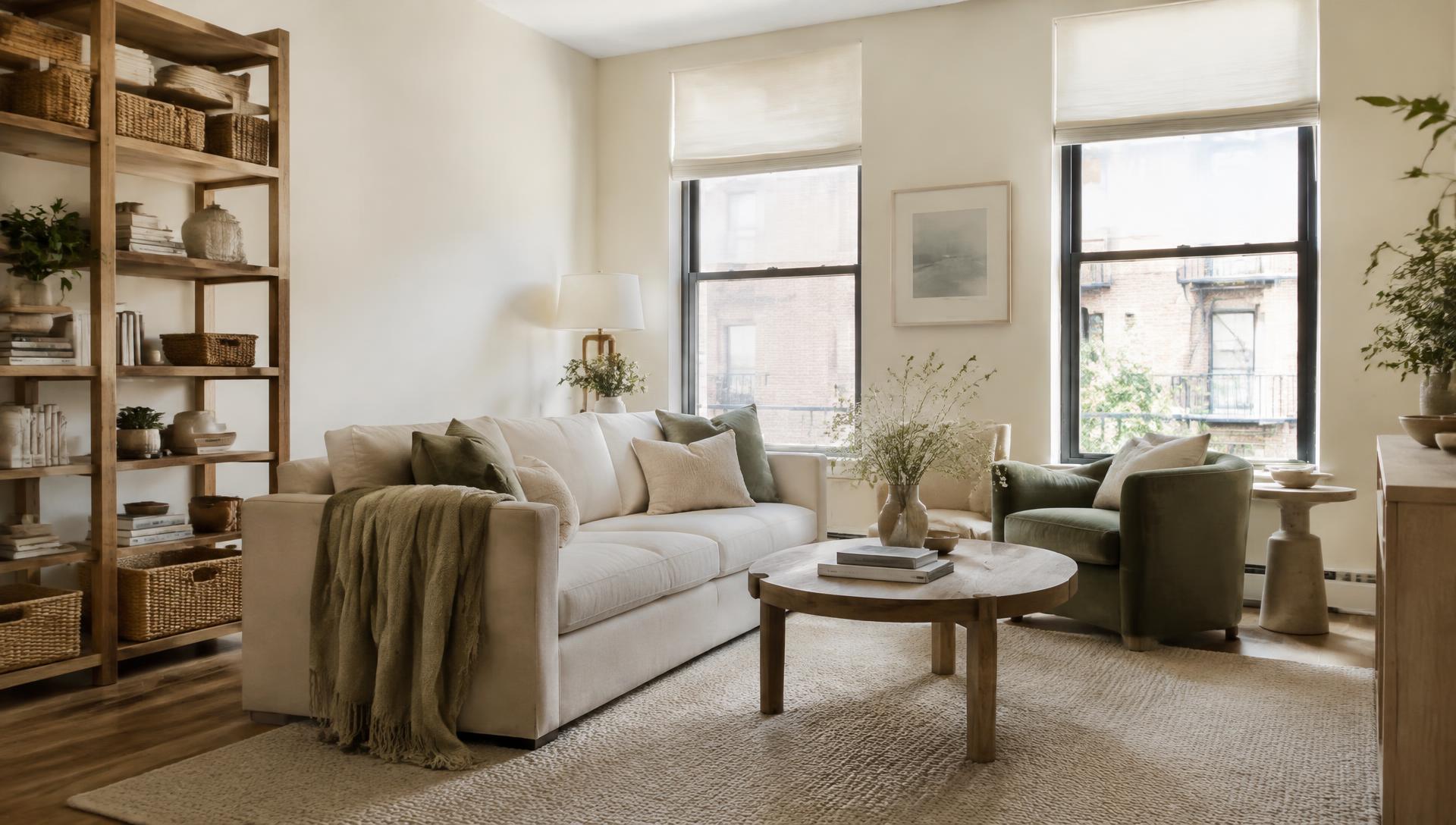
Your sofa is still comfortable, but the living room feels tired. Mail covers the coffee table, a favorite chair sits in a dim corner, and the accessories seem disconnected. New furniture is tempting—but the pieces you own may not be the problem.
A living room refresh on a budget starts with what feels off, not replacing what works. These affordable living room ideas pair free changes with selective updates: move a chair, clear a surface, or borrow a lamp before buying.
Choose your priority: better conversation space, less clutter, or warmer lighting. Set a spending limit and try free changes first. A budget living room makeover can happen one area at a time, without a matching new collection.
Begin With Changes That Cost Nothing
1. Rearrange Around Everyday Activities
Think about how you actually use the room rather than automatically aiming every seat at the same wall. Move a chair closer to the sofa for conversation, or create a reading spot where daylight is useful. Measure first and sketch alternatives before shifting heavy furniture.
Keep walking routes comfortable and preserve access to doors, outlets, vents, and controls. Follow moving and furniture-care guidance, and get help with pieces that are awkward to handle. If the room feels better after a rearrangement, you may discover that the furniture you were planning to replace was never the main problem.
For a free experiment, angle an existing chair toward the sofa. Sit in both places and check the walking route.
A side table is worth reconsidering when there is nowhere convenient to place a drink or reading lamp. Before shopping, move an existing small table beside the seat and check the height against the sofa arm. Compare the footprint with the actual walking route, including clearance when someone stands up. Secondhand solid pieces may be practical if joints, finish, and stability are sound; include any repairs in your budget. Choose a drawer or lower shelf if it replaces another storage item rather than simply adding a new surface to fill.
2. Edit Surfaces and Shop Your Home
Clear one shelf or table completely, then return only the pieces you still enjoy seeing there. Move unrelated paperwork, packaging, and everyday overflow to appropriate storage. This helps you judge the room’s existing colors and shapes without adding anything.
Look elsewhere in your home for a bowl, basket, lamp, or piece of art that could work differently in the living room. Check scale and function rather than moving objects just for novelty. A small collection often looks more intentional when grouped in one place than when scattered across several surfaces, and unused decor can simply rest in storage.
Try an unused bowl for remotes or move a hallway photo to a cleared shelf. Test a spare lamp by the reading chair using the lighting checks below.
Update Soft Layers Selectively
3. Change Pillow Covers Before Whole Pillows
If your existing pillow inserts are in usable condition, new covers can shift the room’s color and texture without replacing the whole arrangement. Check insert dimensions and closure styles before purchasing. Choose a small palette that connects with the sofa, rug, or artwork already staying.
You might combine one patterned cover with a plain textured option rather than buying several competing prints. For a no-spend variation, move suitable pillows from another room. Follow care labels when cleaning covers and inserts, and consider how practical delicate trims or difficult fabrics will be in your household.
Keep two comfortable inserts and compare covers instead of whole pillows. Try them beside your existing throw before changing anything else.
4. Give Throws a Purposeful Place
A throw can soften a sofa or chair, but it should also be pleasant to use. Choose a texture and care routine that suit your household rather than treating it as a purely decorative layer. Fold an existing blanket neatly over an arm, or place it in a basket close to the seat where you use it.
If you buy one, think about how its color relates to the room across seasons. A quiet shade may work through several future changes. Avoid piling on multiple throws when one good everyday option would create the same sense of warmth with less clutter.
5. Reconsider the Rug Before Replacing It
A rug may feel wrong because of its position rather than its design. Try adjusting it in relation to the seating group, checking that furniture placement and walking routes remain practical. Clean it according to the manufacturer’s guidance before deciding whether its appearance still suits the room.
If replacement is necessary, measure the arrangement rather than guessing from the room’s overall size. Compare material, care needs, edge thickness, and compatibility with your flooring and any rug pad. A secondhand rug may be worth considering after assessing its condition, cleaning requirements, and total cost of making it usable.
Change the Atmosphere With Light and Walls
6. Improve Lighting One Layer at a Time
Before adding fixtures, consider whether an existing lamp could move closer to a reading chair or brighten a dim corner. Different light sources can support different activities, so the room does not have to rely entirely on one overhead fixture. Check that cords can reach suitable outlets without creating awkward routes.
When replacing bulbs, follow the fixture’s requirements for bulb type, wattage, and any dimmer compatibility. Compare light appearance as well as brightness so nearby lamps feel coherent. If a new lamp is within budget, choose it for a specific lighting need rather than simply filling an empty surface.
7. Refresh the Art Arrangement
Existing artwork can feel new when grouped differently or moved to a more suitable wall. Lay out a proposed arrangement on the floor or use paper templates before making holes. Consider the scale of nearby furniture and view the composition from the places where people normally sit.
Affordable additions might include your own photographs, a textile you already own, or a print from a source with clear reproduction rights. Reuse frames when possible, checking their condition and hanging hardware. Follow mounting instructions for the wall surface, and review your lease before drilling or using adhesive hanging systems.
8. Adjust Curtains for Better Proportion
Curtains influence both the room’s light and its sense of proportion. Before replacing them, check whether the existing panels need cleaning, hemming, or a more balanced position. Follow fabric-care instructions, and measure carefully if adjusting hardware height or width.
If new panels are needed, compare their finished dimensions, opacity, and maintenance requirements. Consider nearby heaters, vents, and other manufacturer-specified clearances when planning placement. Review lease restrictions before changing hardware. A restrained fabric that works with several colors may offer more flexibility than a strong pattern chosen without considering the sofa, rug, and artwork together.
Finish With Useful, Personal Details
9. Style One Surface With Fewer Pieces
Choose a coffee table, console, or shelf and give it a simple composition: perhaps a few books, a meaningful object, and a small plant or vase. Vary shapes and heights, but leave enough usable space for the surface’s everyday job. You do not need to purchase an entire decorative grouping.
Use existing books and a bowl on that one surface. If something is missing, choose one useful accent—not a matching collection. Inexpensive living room updates should solve a problem, not add clutter.
If adding a plant, match it to the room’s light and the care you can provide. Check suitability for children and pets where relevant. Place water-containing vessels thoughtfully and protect finishes as recommended. Personal objects generally bring more character than buying filler simply because a shelf looks empty.
10. Hide Daily Clutter With Targeted Storage
Identify the belongings that regularly interrupt the room’s appearance: remote controls, charging accessories, magazines, games, or toys. Give each category a convenient home close to where it is used. An existing drawer, sturdy basket, or small lidded box may solve the problem.
Avoid buying oversized storage that invites unrelated objects to accumulate. If you need a new piece, choose dimensions and access that suit the contents. Keep electronics ventilated according to their instructions and do not conceal operating devices in unsuitable containers. The best finishing touch is a room that returns to order without a complicated cleanup.
Make Each Purchase Earn Its Place
Refresh gradually and pause after each change. A rearranged layout, clearer surfaces, and better lighting may achieve the atmosphere you wanted before your budget is spent. Keep useful furnishings and let the room evolve around your actual life.
Explore our living room collection for versatile pillow covers, practical lighting, thoughtful storage, and finishing accents. Choose pieces that connect with what you already own rather than buying a completely new look at once.
Today, clear one coffee table or shelf and return a few useful or meaningful items you own. Leave usable space and try the arrangement before spending. One improved area is enough to start.
Explore Affordable Living Room Updates
Editorial buying criteria, not tested product reviews. Retailer-specific recommendations await verified information and affiliate approval.
Disclosure: Rooms & Order provides independent home organization ideas and product guidance. We do not currently have active affiliate partnerships or affiliate links. In the future, we may earn commissions from qualifying purchases made through clearly identified affiliate links, at no additional cost to you. Learn more
- Pillow Covers and Throws
- Refresh color and texture while keeping useful furnishings.
- Clearly listed dimensions
- Practical care instructions
- Versatile colors and textures
- Accent and Task Lighting
- Support reading, conversation, and a more layered atmosphere.
- Appropriate fixture specifications
- Useful light direction
- Room-compatible proportions
- Decorative Storage and Accents
- Contain everyday belongings and highlight meaningful objects.
- Purposeful capacities
- Furniture-friendly materials
- Flexible styling options
Continue with our Small-Space Solutions collection.
Pinterest editorial image
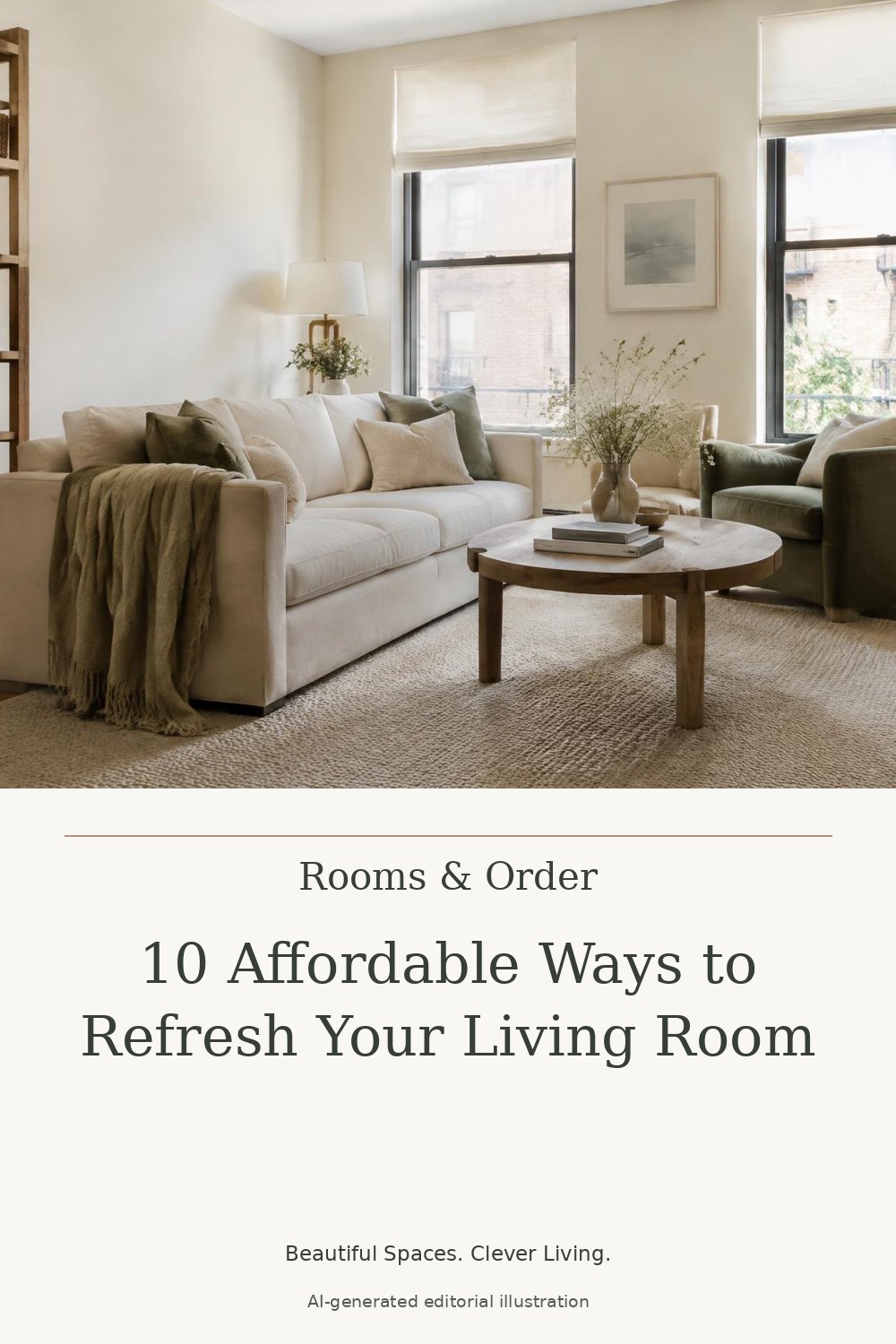
1000 × 1500 pixels · AI-generated interior illustration.
- Suggested title
- 10 Affordable Ways to Refresh Your Living Room | Rooms & Order
- Description
- Give your living room a considered new look through rearranging, editing, practical styling, and selective budget-friendly updates. Discover practical room-by-room ideas from Rooms & Order.
- Keywords
- 10 affordable ways to refresh your living room, home organization, Rooms & Order, living-room, small-spaces
- Board
- Modern Living Room Ideas
- Destination
- /ideas/affordable-living-room-refresh