Buying guide
The Best Types of Storage Baskets for Every Room
Choose storage baskets that suit your rooms, routines, and shelves, with practical guidance on materials, sizing, durability, and everyday use.
By Rooms & Order Editors · Published 2026-11-21 · Updated 2026-11-21
Start With What the Basket Needs to Do
You bring home an attractive woven basket, slide it toward a shelf, and discover the handles catch on the opening. Or it fits perfectly, but the rough weave snags the scarves you wanted to store. A basket can look right in the store and still be wrong for the job at home.
The best storage baskets make a room easier to use, not simply hide everything that lacks a home. Before choosing a color or weave, decide what belongs inside, where the basket will sit, and how often someone will move it. A basket for daily laundry needs different qualities than one holding guest blankets. This guide compares types of storage baskets so you can choose storage baskets for every room around real routines, rather than buying a matching collection first.
Start with one troublesome area, gather its contents, and measure the available space before deciding which basket material and shape make sense.
Match Basket Materials to Everyday Wear
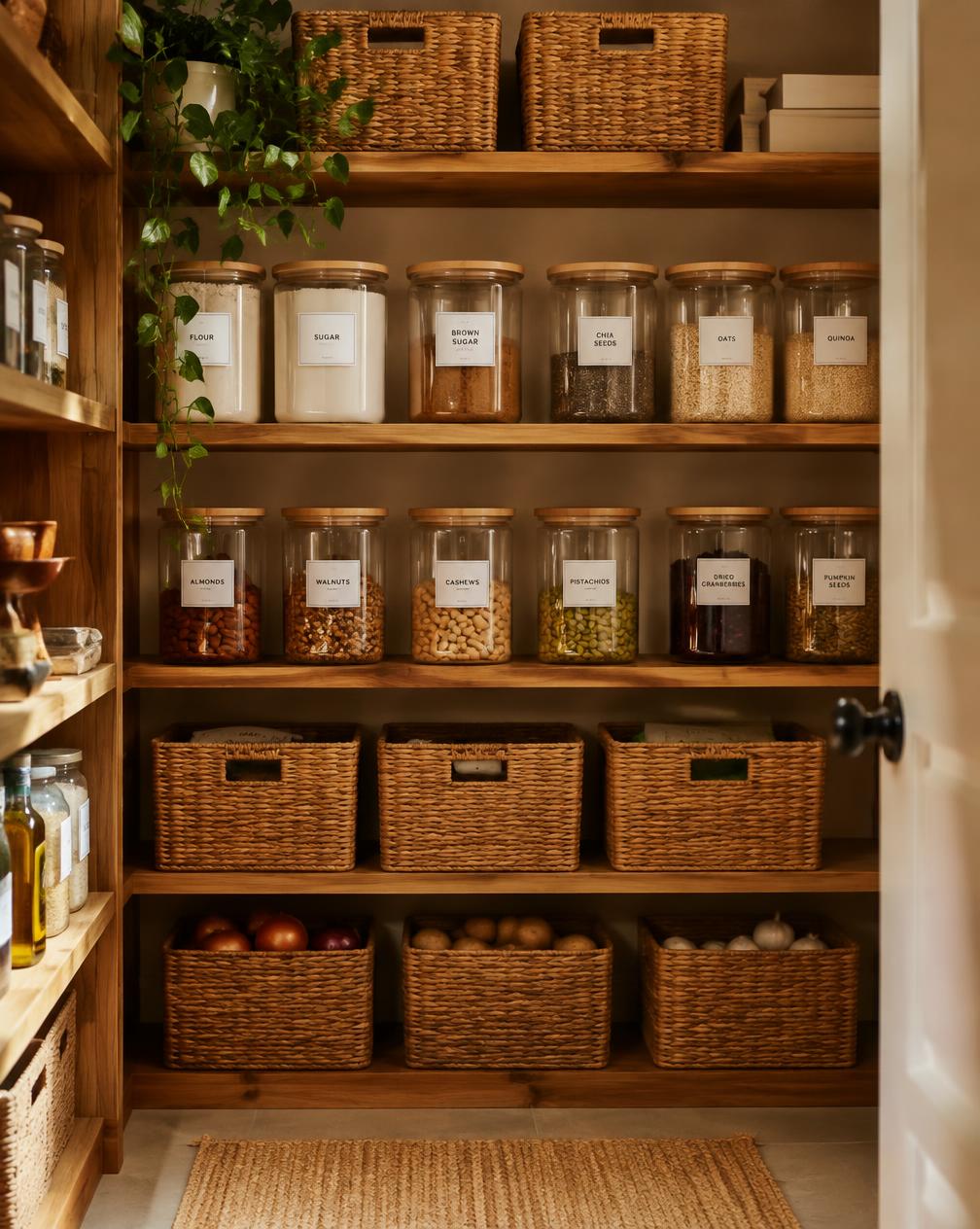
Woven baskets: suited to dry living areas, blankets, and visible shelves. They add texture and may hold their shape well, depending on construction. Rough interiors can snag fabrics, gaps can lose small items, and natural fibers may need protection from dampness.
Fabric baskets: suited to clothing, linens, and lightweight accessories. Soft sides and low weight can make them convenient to handle. Unreinforced sides may collapse, and concealed stiffeners can limit washing; check the whole basket’s care label.
Plastic or wipeable baskets: useful for suitable toiletries and frequently cleaned storage. A wipeable surface can simplify cleanup. Check product compatibility, drainage, and ventilation; a wipeable finish does not guarantee moisture tolerance or make every cleaning method suitable.
No material is universally better or more durable. Compare the individual basket’s construction, care instructions, handles, and intended use.
Use Woven Baskets Where Texture Matters
Woven baskets bring texture to living rooms, bedrooms, and open shelving. Rattan, willow, seagrass, and water hyacinth can look similar from a distance, but their construction, finish, and stiffness vary. Inspect the rim, base, and handles rather than assuming a material guarantees durability. A tightly constructed basket with a stable bottom works well for throws or magazines; a loosely woven design may snag delicate knitwear or let small objects escape. Check whether the inside feels rough, and add a removable liner when appropriate. Keep natural-fiber baskets away from persistent dampness unless their care instructions specifically support that setting.
Choose Fabric or Wipeable Options for Practical Jobs
Fabric baskets are useful when softness, light weight, and flexibility matter. They can hold children's clothing, spare linens, or accessories without introducing a hard edge. However, an unstructured basket may collapse when partly empty, so look for reinforced sides if it needs to slide neatly onto a shelf. Read care labels carefully: a fabric exterior does not mean the whole basket is washable, especially when cardboard or other stiffeners are concealed inside. For spills, wet supplies, or frequent cleaning, consider a plastic basket with a wipeable surface. Inspect ventilation, drainage, and handle comfort according to the intended job.
For children’s lightweight hats and mittens, try a small fabric basket on a low, accessible shelf. Choose an opening that makes the contents easy to see and keep the load manageable for the child using it.
Measure for Shelves, Handles, and Real-Life Access
Check the Opening, Not Just the Shelf
Measure the clear width, depth, and height of the opening where the basket will live. Account for shelf supports, door hinges, baseboards, and any lip across the front. Then check the basket's external dimensions, including handles and flared rims. Internal dimensions matter too: a basket that fits the shelf might still be too narrow for folded towels or letter-size papers. Leave enough clearance to grasp and remove it without scraping your knuckles. If several baskets will sit together, allow room between them rather than filling every fraction of the shelf with containers that become difficult to pull out.
Size the Basket for Its Contents and Carrier
Bigger is not always more useful. A large basket full of books or cleaning bottles can become awkward to lift, while one filled with lightweight throws may remain manageable. Choose smaller containers for dense objects and wider openings for bulky textiles. Think about the person using the basket, including children who need low, accessible storage. Handles should feel secure and provide enough room for a comfortable grip, but never assume they can support unlimited weight. Follow any stated load limits. For frequently used categories, a basket that stays slightly underfilled is generally easier to search and return than one packed tightly.
Choose Bathroom and Laundry Baskets Carefully
Separate Dry Bathroom Storage From Wet Supplies
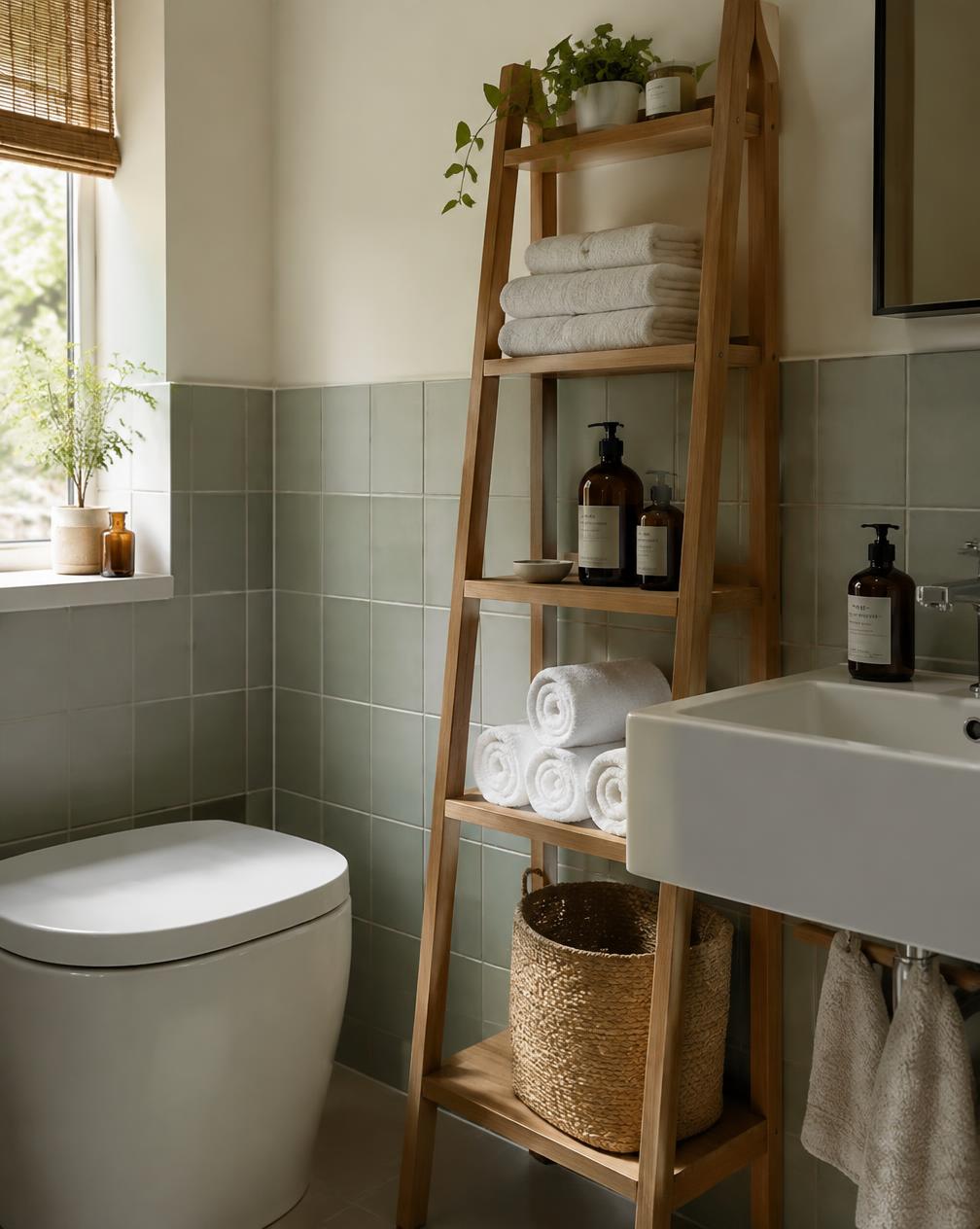
Bathroom baskets work best when their contents match the conditions around them. A fabric or natural woven basket can organize spare toilet paper on a dry shelf, but a splash-prone spot calls for something more moisture tolerant. Use washable or wipeable containers for cleaning supplies, checking that the material is compatible with the products stored inside. Keep bottles upright and follow their storage labels. Ventilated baskets can help avoid trapping moisture around bath accessories, although ventilation is not a substitute for drying them. Store clean towels away from leaks, shower spray, and damp floors, and avoid crowding baskets against wet walls.
For suitable bathroom toiletries, choose a basket whose care instructions permit washing and whose base keeps bottles upright. Place it away from direct spray, follow the toiletries’ storage labels, and let the basket dry after cleaning before returning the contents.
Make Laundry Baskets Easy to Carry and Empty
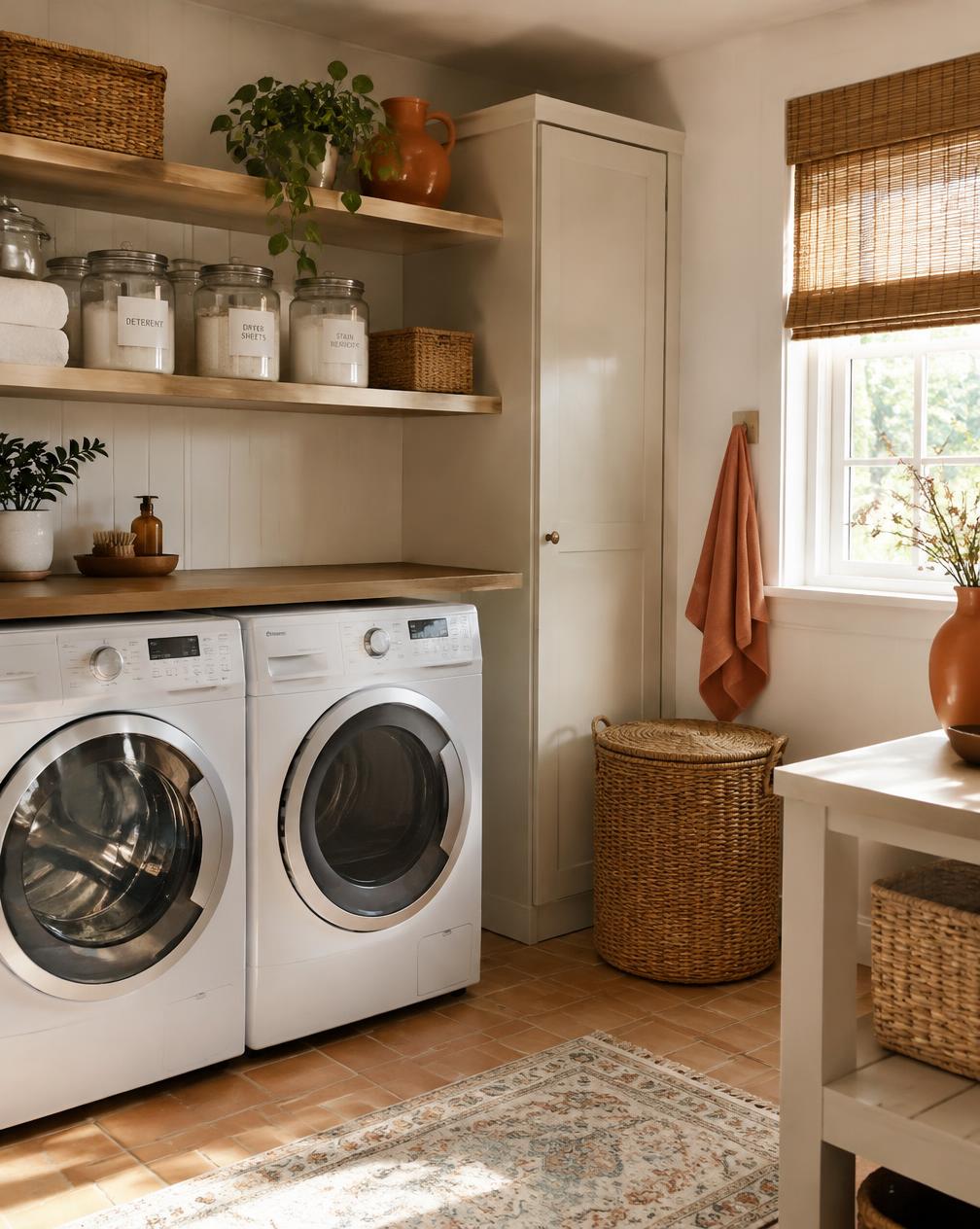
For laundry, consider the entire trip from bedroom to washer and back. A tall hamper may suit a corner, while a lower, wider basket can make folding and carrying easier. Check whether the loaded basket will pass through narrow doorways and whether its handles remain comfortable with weight inside. Removable liners can simplify emptying, provided their care instructions fit your routine. Avoid leaving wet towels or exercise clothes compressed in a closed hamper; allow them to dry first when practical. If sorting at the source helps your household, use clearly assigned baskets, but do not add more categories than anyone will maintain.
Give Living Areas and Entryways Clear Basket Jobs
Keep Living Room and Bedroom Categories Simple
In a living room, one basket for throws and another for frequently used games may be more effective than several small baskets with unclear purposes. Choose a broad opening for items people retrieve daily, and reserve lids for belongings that benefit from concealed storage but are used less often. In bedrooms, soft baskets can divide scarves, socks, or workout clothes on open shelves. Avoid piling unrelated items together just because the colors coordinate. A basket becomes useful when its contents are predictable. Add a discreet label where needed, especially on high shelves or in shared spaces where several people put things away.
A broad woven basket beside the sofa could hold two everyday blankets. Check the interior for rough edges, use a suitable removable liner if needed, and keep the basket outside the walking path. Simple storage basket organization ideas work best when each container has one clear job.
Use Entryway Baskets to Contain Specific Clutter
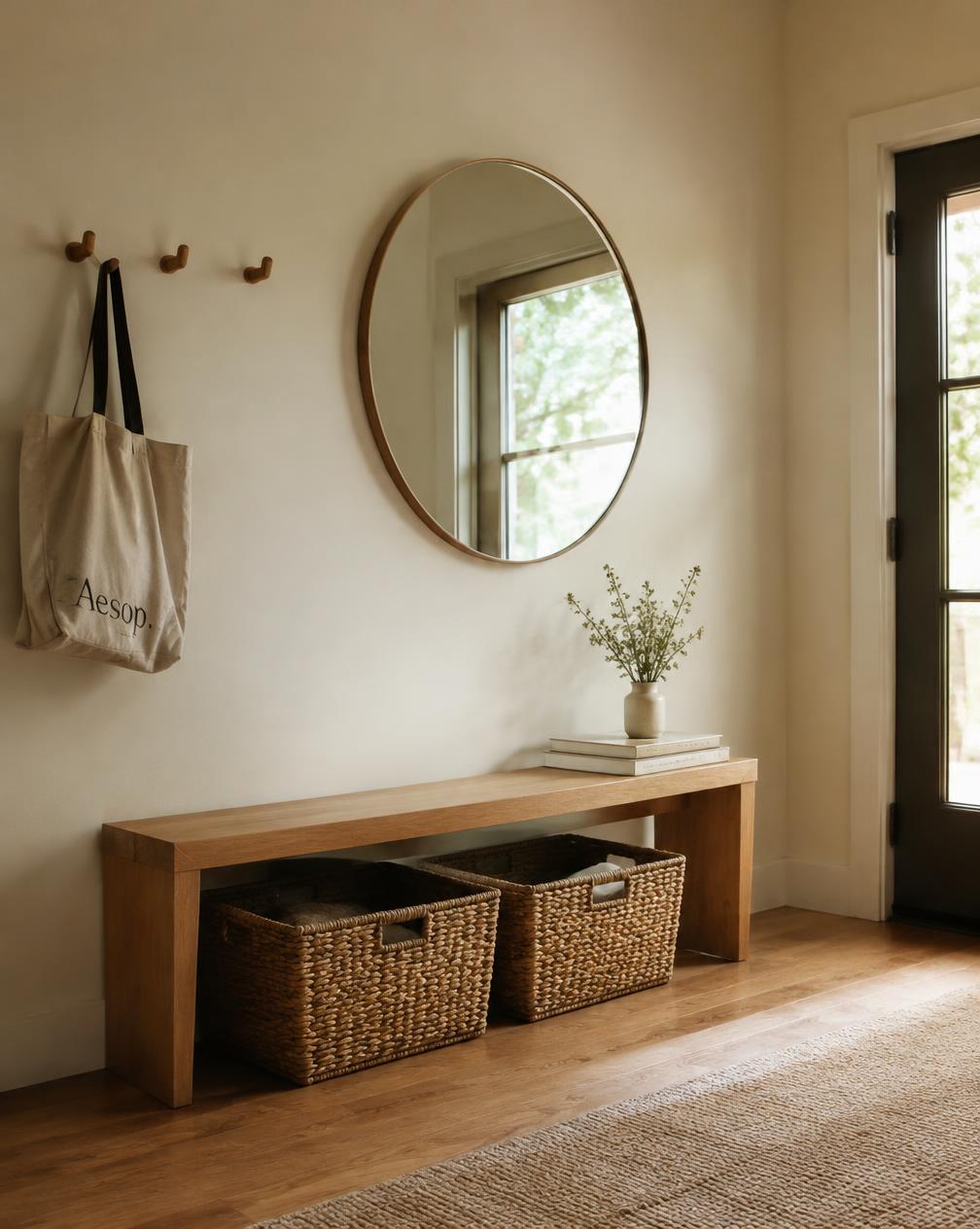
Entryway baskets should catch a defined category, not become a holding area for everything entering the house. Assign one to gloves, one to dog-walking supplies, or one to each household member's small accessories. Shoes need enough ventilation and a container that can tolerate tracked-in dirt; let wet footwear dry before storing it. Keep baskets out of the walking path and avoid stacking them where a door could knock them over. For a budget-conscious update, begin with containers you already own. Matching labels or washable liners can create a coordinated appearance without replacing baskets that are already the right size.
Build a Basket Collection That Earns Its Space
The best basket is the one that fits its location, protects its contents, and makes an everyday task simpler. Before buying multiples, try one in the intended spot and use it through several normal routines. Notice whether it slides out easily, stays clean, and holds the category without overflowing. Compare total cost, including liners or labels, rather than appearance alone. Browse our small-space solutions collection to plan basket storage around the spaces you have already measured. Start small, and expand only where a basket solves a clear problem.
Before you shop, write one short basket brief: the intended spot’s clear width, depth, and height, plus exactly what the basket needs to hold. Include handle clearance and room to lift it out. Use that note to check a basket you already own before purchasing another.
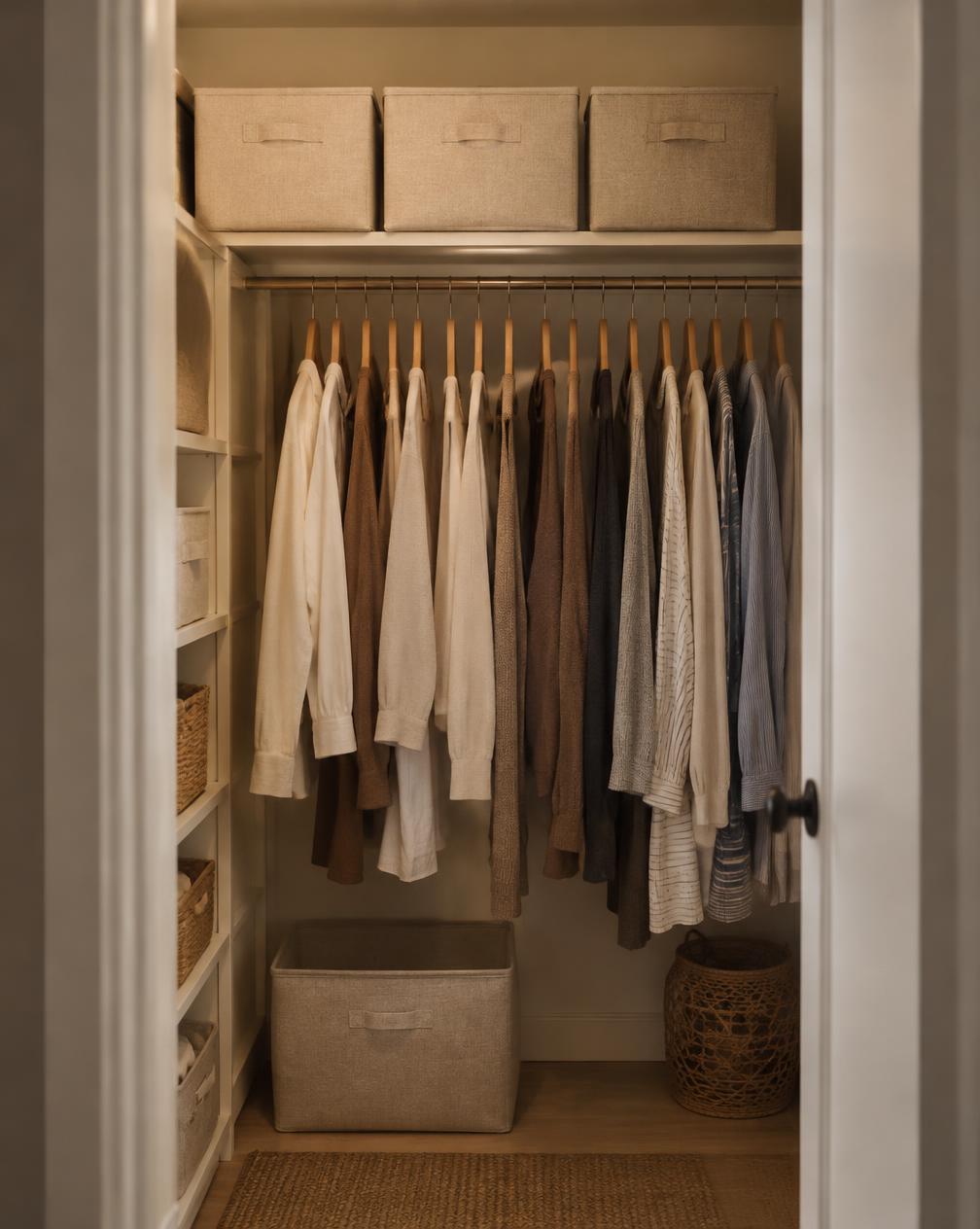
Explore Baskets by Room and Routine
Editorial buying criteria, not tested product reviews. Retailer-specific recommendations await verified information and affiliate approval.
Disclosure: Rooms & Order provides independent home organization ideas and product guidance. We do not currently have active affiliate partnerships or affiliate links. In the future, we may earn commissions from qualifying purchases made through clearly identified affiliate links, at no additional cost to you. Learn more
- Woven Storage Baskets
- Textured containers for dry rooms and visible shelves.
- Stable bases
- Comfortable handles
- Optional removable liners
- Fabric Storage Baskets
- Soft-sided organization for clothing, linens, and accessories.
- Shelf-friendly dimensions
- Reinforced options
- Clearly stated care instructions
- Bathroom and Laundry Baskets
- Practical storage selected around moisture, cleaning, and carrying needs.
- Wipeable options
- Ventilated designs
- Manageable carrying sizes
Continue with our Small-Space Solutions collection.
Pinterest editorial image
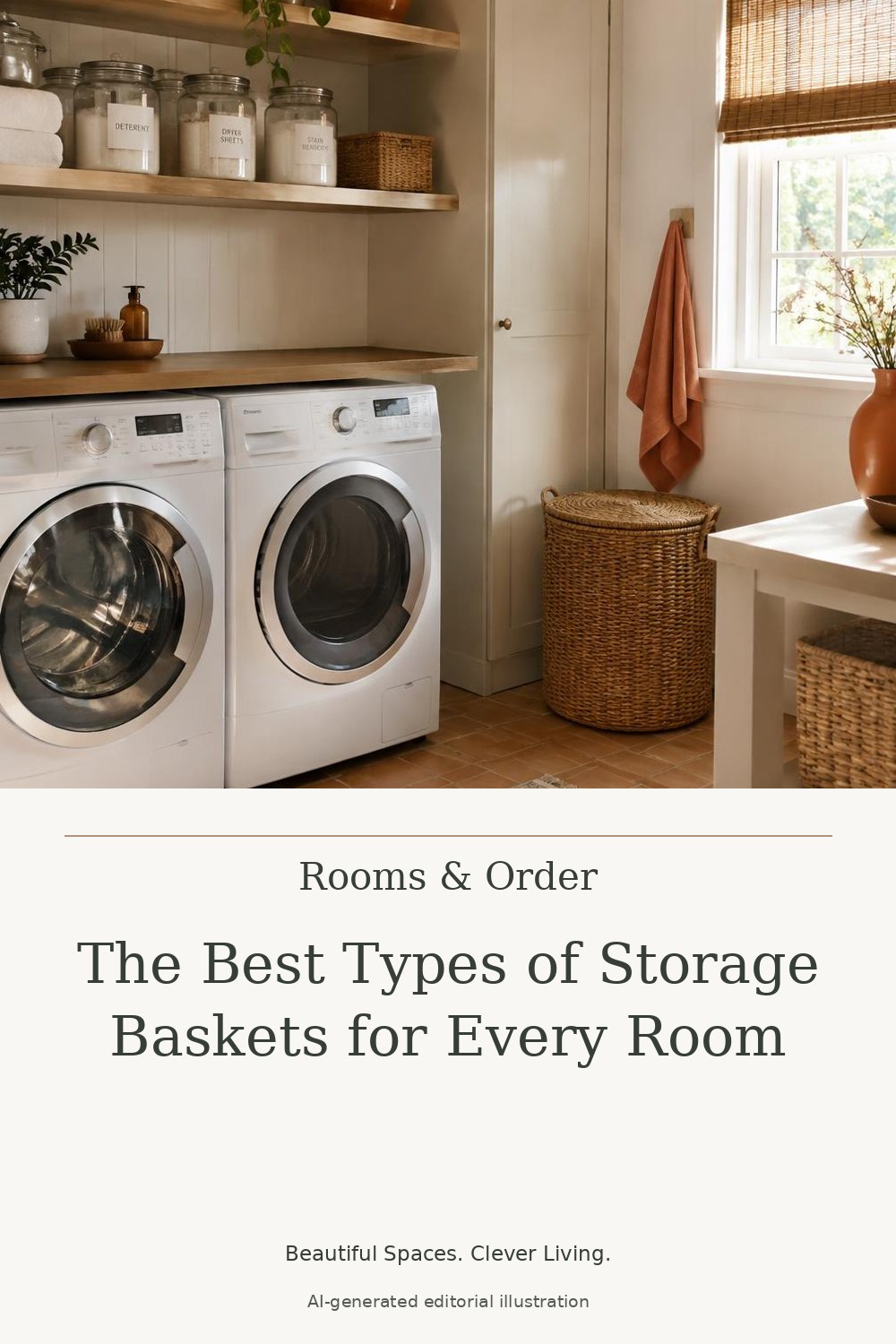
1000 × 1500 pixels · AI-generated interior illustration.
- Suggested title
- The Best Types of Storage Baskets for Every Room | Rooms & Order
- Description
- Choose storage baskets that suit your rooms, routines, and shelves, with practical guidance on materials, sizing, durability, and everyday use. Discover practical room-by-room ideas from Rooms & Order.
- Keywords
- the best types of storage baskets for every room, home organization, Rooms & Order, small-spaces, closets, living-room, laundry
- Board
- Beautiful Home Organization
- Destination
- /ideas/best-storage-baskets-every-room