Storage ideas
Under Bed Storage Ideas for Small Bedrooms
Put under-bed space to work with rolling containers, fabric bags, seasonal storage, and thoughtful systems for shoes and spare linens.
By Rooms & Order Editors · Published 2026-11-21 · Updated 2026-11-21

Treat the Space Under Your Bed as Planned Storage
When the wardrobe is overflowing, shoes are taking up valuable closet space, and spare bedding has nowhere convenient to go, the unused area beneath an existing bed starts to look like the most wasted storage in the room. Thoughtfully planned under bed storage can absorb those overflow categories without adding a single piece of furniture to the bedroom — as long as the space is planned rather than improvised.
Under-bed storage can relieve an overfilled closet, but only when the space remains easy to access and clean. Sliding unrelated belongings beneath the bed creates a hidden clutter zone, not a useful system. Start by choosing a few categories that do not need constant attention, such as off-season clothing, spare bedding, or occasional shoes. Then check whether those belongings are suitable for the room's conditions. A damp bedroom, a low platform frame, or a bed with closely spaced support legs may call for a different approach. The best arrangement works with the bed you have rather than forcing containers into every opening.
Measure Clearance and Plan How Containers Will Move
Check Every Obstruction Beneath the Frame
Measure from the floor to the lowest part of the bed frame, not simply to the top of its side rail. Look for center supports, crossbars, brackets, and legs that divide the available footprint. Measure the opening through which a container must pass as well as the space where it will rest. Include lids, handles, wheels, and any bulging fabric in your calculations. Carpet can make rolling or sliding harder, so consider the actual floor surface. Leave a little clearance instead of choosing a container that only fits when forced. Check the bed manufacturer's guidance before using the area for storage.
A practical way to measure: run a tape from the floor to the lowest obstruction — often a center support rather than the side rail — and write that figure down. Then measure the width and depth between the bed frame supports, and compare those numbers with a container's external height, including its wheels and lid. Check how much room you have at the bedside to slide the container out and open it, and leave enough clearance to remove it without tilting or forcing. Compare your actual measurements with the product's stated dimensions before buying, since listed sizes do not always include wheels, handles, or lids.
Keep Retrieval Practical and Avoid Unsafe Modifications
Think about where you will stand or kneel to pull each container out. A bedside table, wall, or radiator may block access even when there is plenty of room under the frame. Use the most accessible side for items you retrieve more often, and reserve the far end for genuinely occasional belongings. Do not remove structural supports or alter the frame to create room. If considering bed risers, confirm that the bed manufacturer permits them and that they suit the frame, legs, floor, and expected load. Follow all installation instructions rather than improvising with blocks or other objects not designed for the purpose.
Choose Between Rolling Containers and Fabric Bags
Use Rolling Storage for Easier Access
Rolling drawers and low wheeled containers can make heavier categories easier to retrieve, but wheel quality and clearance matter. Confirm that the wheels move appropriately on your flooring and that the container clears the frame when loaded. A rigid lid can help protect contents from settling dust, although it should not be assumed airtight unless specified. Check how the lid opens: some designs need to be pulled out completely, while others offer partial access. Avoid overloading the container beyond its stated capacity. For books or other dense belongings, several smaller units may be more manageable than one large drawer that becomes difficult to move.
Choose Fabric Bags for Lightweight Textiles
Fabric storage bags suit spare blankets, seasonal clothing, and other lightweight textiles. Their flexible sides can be useful in shallow spaces, but overfilling may make them too tall to pass beneath the bed. Look for usable handles, secure closures, and seams appropriate to the expected contents. A clear window can help identify items without opening the bag, while a label works just as well on an opaque design. Check the material and cleaning instructions rather than assuming the bag is washable or dustproof. Lift it with support when needed; dragging a heavily packed fabric bag by one handle can strain its construction.
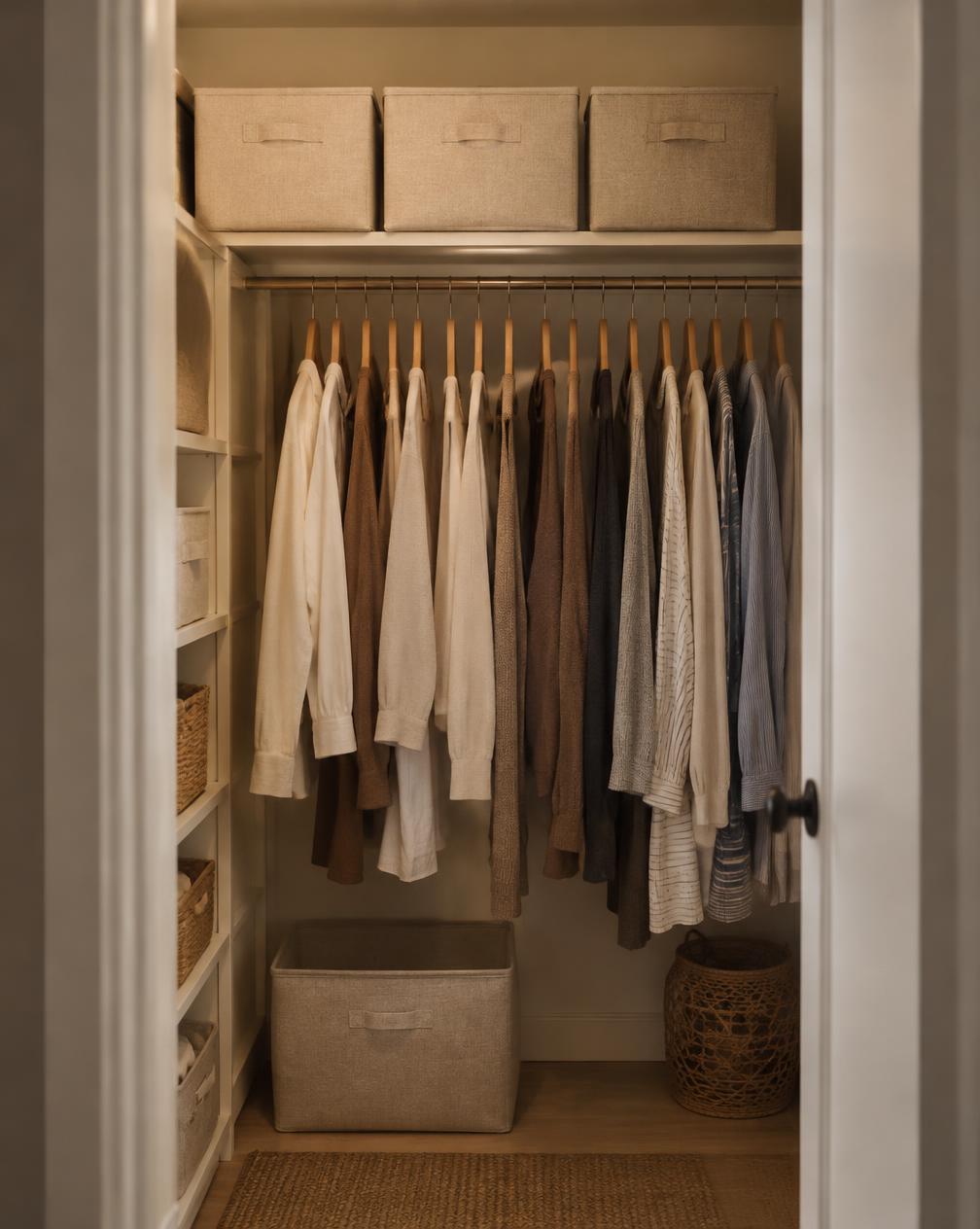
A spare comforter and pillow set, for instance, can go into a fabric storage bag appropriate for the materials — clean and completely dry first — with a label noting which set is inside, so guest bedding stops competing with everyday linens for shelf space.
Store Seasonal Clothing and Bedding Thoughtfully
Pack Clean, Dry Items in Manageable Categories
Before storing clothing or linens, make sure they are clean and thoroughly dry. Group items by a useful category, such as summer sleepwear or guest bedding, instead of filling each container with whatever fits. Place a short contents list where you can read it from the bed's edge. Keep frequently used bedding somewhere easier to reach if pulling out a container would interrupt the room every week. Avoid compressing structured garments or delicate items without checking their care requirements. Leave room to repack belongings neatly after use, and review stored textiles periodically for signs of moisture, pests, or changes in condition.
For example, you might keep winter sweaters in a labeled rolling container on the most accessible side of the bed, then swap them for summer clothing when the seasons change. One clearly marked container per category is easier to live with than several unmarked ones you have to open to identify.
Use Vacuum Bags Only With Compatible Contents
Vacuum bags can reduce the volume of some compressible textiles, but they are not suitable for every garment, filling, or storage situation. Check both the item's care guidance and the bag manufacturer's instructions before compressing anything. Down, feathers, leather, fur, structured garments, and certain delicate materials may require different storage; do not assume they are compatible. Follow any limits on compression or storage duration. Confirm whether the valve works with your vacuum or requires a particular pump. Bags must hold only clean, completely dry contents, and they do not solve existing moisture problems. Avoid sharp objects, excessive filling, or forcing compressed bags against bed hardware.
Organize Shoes and Keep Dust Under Control
Give Shoes Compartments Without Crushing Them
An under-bed shoe organizer can free closet floor space, especially for occasional pairs. Measure your largest shoes and compare them with the actual compartment dimensions; a grid that suits flats may not accommodate ankle boots or larger sneakers. Remove loose dirt and allow footwear to dry before enclosing it. Store pairs together and avoid stacking heavy shoes on delicate uppers. If odors or moisture persist, address those issues before closing the organizer. Keep daily footwear nearer the entry or closet if retrieving it from beneath the bed feels inconvenient. Under-bed storage should simplify dressing rather than add an awkward step to every morning.
Occasional footwear — dress shoes worn a few times a year, for example — can sit in compartments sized for the actual shoes and the available space, rather than a generic grid that crushes tall pairs or wastes room on small ones.
Make Cleaning Part of the Storage Plan
Choose fewer, well-defined containers rather than many loose packages that are tedious to remove. Leave access to pull everything out for floor cleaning, and wipe or vacuum container exteriors as appropriate for their materials. Lids and zippered covers can reduce dust settling directly on belongings, but no closure eliminates the need to clean the surrounding area. If you use a robot vacuum, check its clearance and avoid arrangements that could trap it. Keep cords clear of drawers and wheels. Schedule a review when you rotate seasonal clothing so unused belongings do not remain under the bed simply because they are out of sight.
Buy for Fit, Not Maximum Capacity
How to maximize storage in a small bedroom often comes down to using the space you already have, and under bed storage containers are one of the simplest small bedroom storage solutions when they are chosen to fit the frame, the floor, and the belongings inside them.
For a budget-conscious setup, measure first and reuse suitable containers before purchasing more. Compare the total cost of an arrangement, including lids or accessories, and avoid paying for capacity you cannot comfortably access. Start with one container to confirm the fit and handling, then expand if the system genuinely helps. Under-bed storage works best as a deliberate extension of your closet, not a place to postpone decisions. Explore our under-bed storage collection for rolling containers, fabric bags, shoe organizers, and compatible compression options, keeping your frame measurements and belongings' care requirements close at hand.
You can start tonight without spending anything: measure the clear space beneath your bed, choose one category that would genuinely benefit — spare bedding, seasonal clothing, or occasional shoes — and check whether a container you already own fits the opening. Buy purpose-made under bed storage containers only when nothing suitable already exists, and let your measurements, not the largest capacity on the shelf, make the decision.
Find Storage That Fits Beneath Your Bed
Editorial buying criteria, not tested product reviews. Retailer-specific recommendations await verified information and affiliate approval.
Disclosure: Rooms & Order provides independent home organization ideas and product guidance. We do not currently have active affiliate partnerships or affiliate links. In the future, we may earn commissions from qualifying purchases made through clearly identified affiliate links, at no additional cost to you. Learn more
- Rolling Under-Bed Containers
- Rigid storage for accessible, clearly separated categories.
- Low-profile dimensions
- Floor-compatible wheels
- Practical lid access
- Fabric Storage Bags
- Flexible containers for suitable clothing and linens.
- Secure closures
- Identification windows or labels
- Manageable carrying handles
- Specialty Under-Bed Storage
- Purpose-specific options for footwear and compatible compressible textiles.
- Measured shoe compartments
- Clearly stated vacuum compatibility
- Item-specific care considerations
Continue with our Under-Bed Storage collection.
Pinterest editorial image
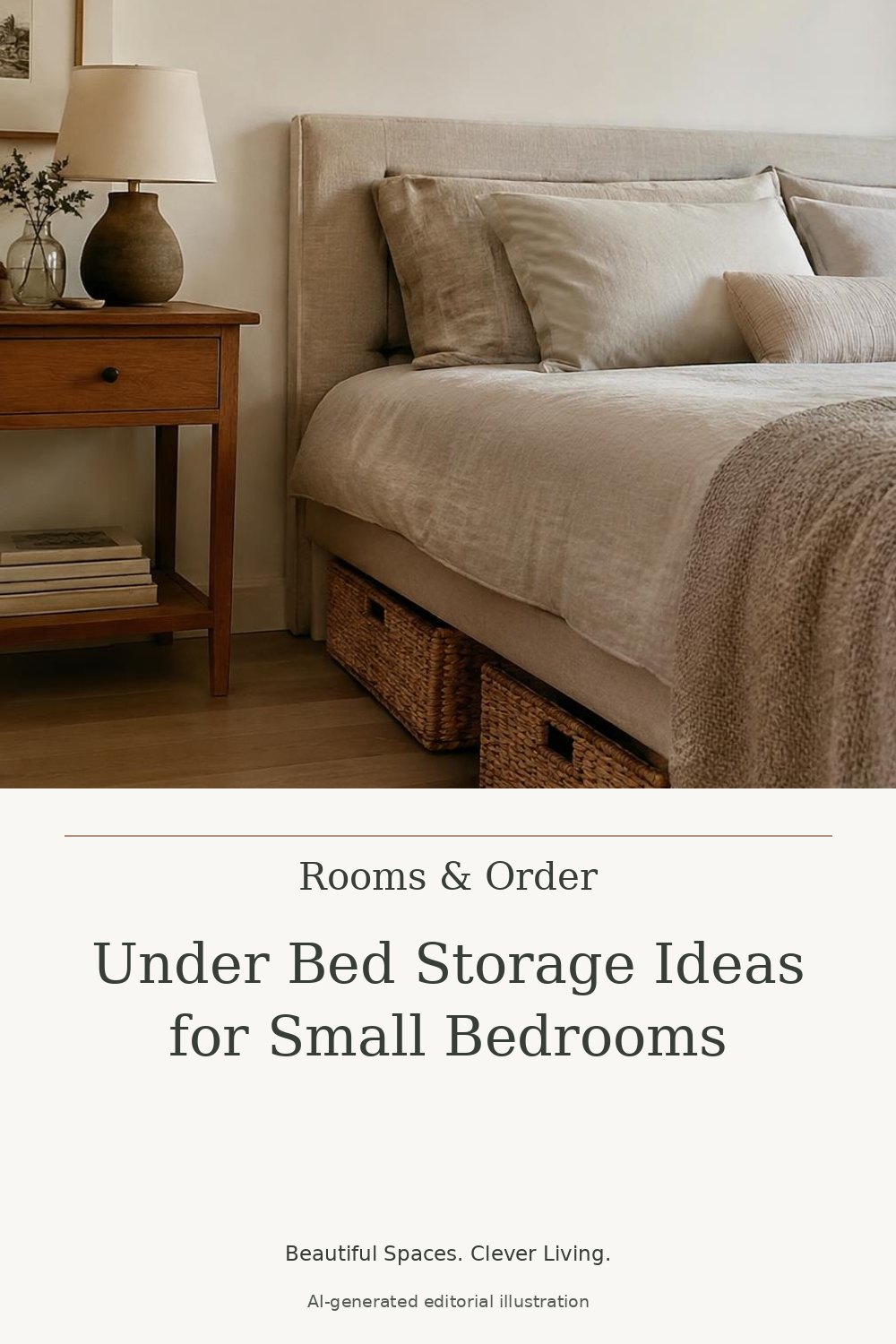
1000 × 1500 pixels · AI-generated interior illustration.
- Suggested title
- Under Bed Storage Ideas for Small Bedrooms | Rooms & Order
- Description
- Put under-bed space to work with rolling containers, fabric bags, seasonal storage, and thoughtful systems for shoes and spare linens. Discover practical room-by-room ideas from Rooms & Order.
- Keywords
- under bed storage ideas for small bedrooms, home organization, Rooms & Order, under-bed, bedroom, small-spaces
- Board
- Bedroom Storage Solutions
- Destination
- /ideas/under-bed-storage-ideas