Tutorial
How to Organize a Small Closet
Create a practical small closet with a focused declutter, useful hanging zones, divided shelves, accessible shoes, and affordable storage choices.
By Rooms & Order Editors · Published 2026-11-21 · Updated 2026-11-21
Build a Closet Around the Clothes You Actually Wear
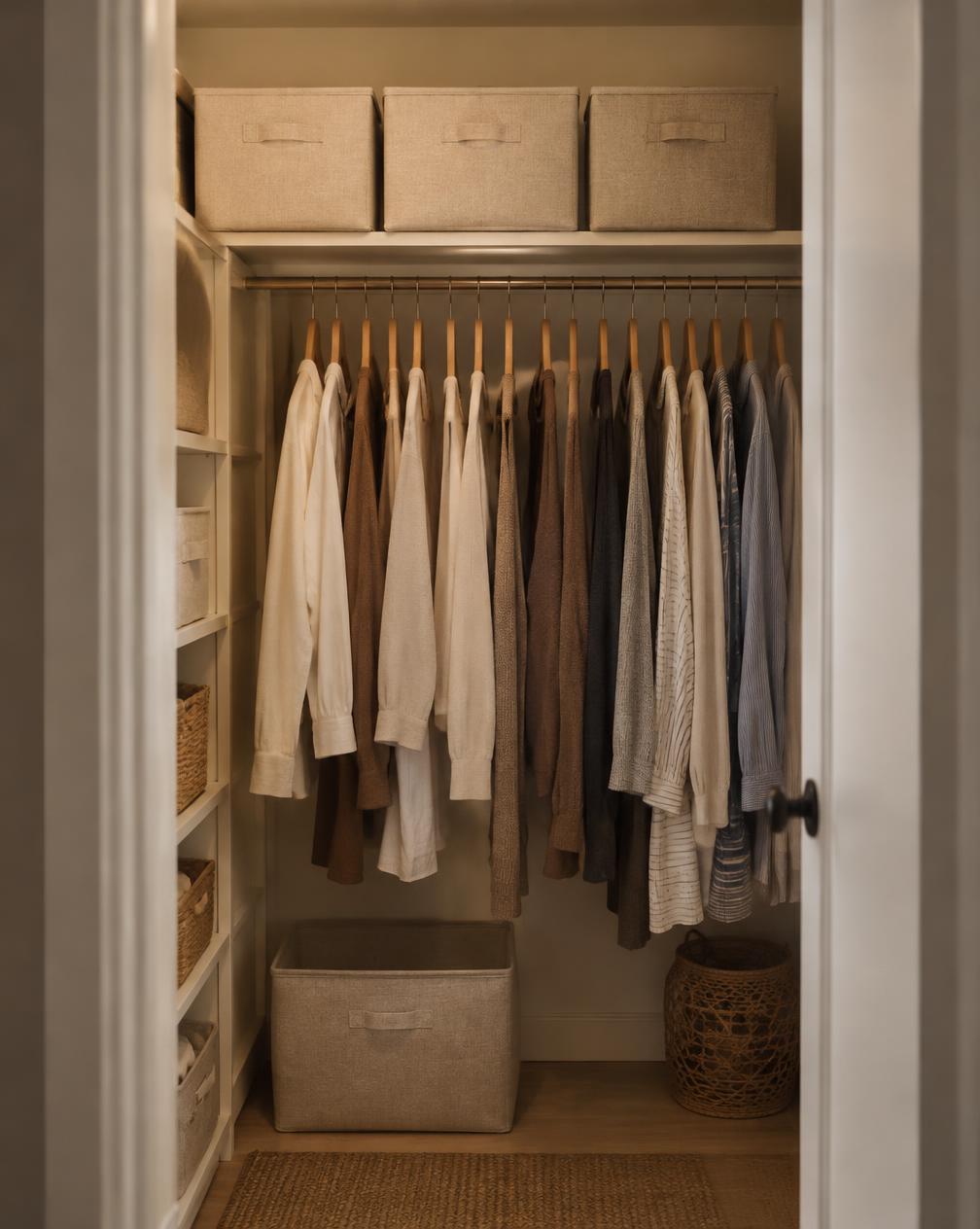
When the hanging rod is so crowded that finding one particular shirt means pushing aside a dozen others, clean laundry has nowhere convenient to go, and shoes are taking over the closet floor, the problem feels bigger than the closet itself. The good news: organizing a small closet does not require an expensive storage system or a single extra piece of furniture — it requires a plan built around the clothes you actually wear.
A small closet works best when you can see your options, remove one item without disturbing five others, and put clean laundry away without a struggle. You do not need an elaborate closet system to achieve that. Start by understanding what you own and which categories need hanging space, shelves, or containers. Resist buying organizers before sorting: a row of matching bins can hide an oversized wardrobe just as easily as it can organize one. Give yourself a clear sorting surface, gather a few bags for outgoing items, and work in manageable sections if emptying the entire closet would overwhelm the room.
Declutter First and Measure the Space That Remains
Sort by Fit, Condition, and Current Use
Handle one clothing category at a time and decide what belongs in your current wardrobe. Set aside items that need repairs, but give that pile a realistic limit and a plan. Separate donations, textile recycling where available, and items that must be discarded according to local guidance. Sentimental clothing can live outside the working closet if it is not worn regularly. When a decision feels difficult, ask whether the item fits your present life and whether you would choose it over similar pieces. Avoid treating empty space as a problem to solve; a little breathing room makes hanging and folding easier to maintain.
Map the Closet Before Choosing Organizers
Measure the opening, interior width, usable depth, and height, including the space above the existing shelf. Note doors, tracks, hinges, baseboards, and any awkward corners. Measure your longest hanging garments and tallest shoes rather than relying on general clothing dimensions. Sketch a simple plan showing where short hanging, long hanging, folded items, and shoes could go. Check the condition of existing rods and shelves, and follow their load limits when known. If you rent, review the lease before changing fixtures. A useful plan respects the closet's structure instead of assuming every inch can support another shelf or hanging attachment.
A practical way to measure: note the closet opening's width and height first, since every organizer has to pass through it. Then measure the interior width and usable depth, the available hanging height from rod to floor, and each shelf's width, depth, and the space above it. Check door and hinge clearance so containers do not block the door's swing or track, and leave enough room to stand back and retrieve belongings comfortably. Note the load limits of the existing rod and shelves when known. Compare your actual measurements with the external dimensions of any organizer you consider — including handles and lids — rather than assuming a listed size will fit your space.
Create Hanging Zones That Match Your Wardrobe
Use Consistent Hangers Without Overpacking
Consistent hangers can reduce visual clutter and help garments sit at a similar height, but choose styles that support the clothing you own. Delicate knits may belong folded rather than stretched on hangers, while structured jackets may need more substantial support. Group hanging clothes by category, then use color order only if it helps you find things. Leave room to slide hangers apart and lift garments off the rod. Turning every hanger backward is optional, not a requirement; a simpler review of unworn categories may suit you better. The goal is a closet that supports dressing, not an arrangement that requires constant styling.
For example, you might group your frequently worn shirts together on suitable hangers you already own, leaving enough space between them to slide one out without disturbing its neighbors. That single change can make weekday mornings noticeably faster.
Add a Second Hanging Level Only Where It Fits
A second rod can make use of space beneath shirts or shorter jackets, but it will not help if most of your wardrobe consists of long dresses or coats. Measure garments on their hangers and allow room for hems to hang freely. Check that the lower section remains reachable and does not interfere with shoes or drawers. Hanging rod extenders transfer weight to the existing rod, so confirm compatibility and capacity before adding one. For installed rods or adjustable systems, follow the manufacturer's mounting instructions and use appropriate hardware. Keep a dedicated long-hanging section instead of forcing every garment into the same configuration.
Make Shelves, Baskets, and Vertical Space Useful
Use Dividers to Keep Folded Categories Separate
Shelf dividers help folded stacks stay in their own lanes, especially for sweaters, jeans, and handbags. Choose dividers compatible with the shelf's thickness and construction, and avoid creating compartments so narrow that items must be squeezed inside. Shorter stacks are easier to retrieve from than tall towers that collapse when you pull out the bottom piece. If shelves are deep, store a single accessible row of daily clothing at the front rather than hiding frequently worn items behind it. Shelf risers can add levels where height is wasted, provided they are stable and do not overload the shelf supporting them.
Clean, sturdy boxes you already own — a shoebox or a gift box, for instance — can separate folded accessories like belts, scarves, or socks on a shelf, doing the same job as purchased organizers at no cost.
Give Baskets Clear Jobs and High Shelves Light Loads
Baskets are helpful for scarves, workout accessories, or small clothing categories that do not stack neatly. Measure the shelf opening and include the basket's handles when checking fit. Label containers that sit above eye level so you do not have to pull down several to find one item. Keep lightweight, less frequently used belongings high, and place everyday categories between comfortable reaching heights. Avoid using an unstable stool or climbing on lower shelves to access storage. A suitable step stool can help where appropriate, but if retrieving something feels cumbersome, move it lower rather than designing your daily routine around difficult access.
Control Shoes and Rotate Seasonal Clothing
Choose Shoe Storage That Preserves Access
Start by counting the shoes you wear regularly and measuring the pairs that take up the most space. A low rack can organize daily footwear without hiding it, while individual boxes may suit occasional pairs if you can identify the contents easily. Let shoes dry and clean off loose dirt before putting them away. Over-door organizers require clearance at the top and sides of the door, and their hooks must be compatible with the door and any lease restrictions. Avoid blocking ventilation or forcing a door to close. Leave tall boots enough space to retain their shape without crowding neighboring clothing.
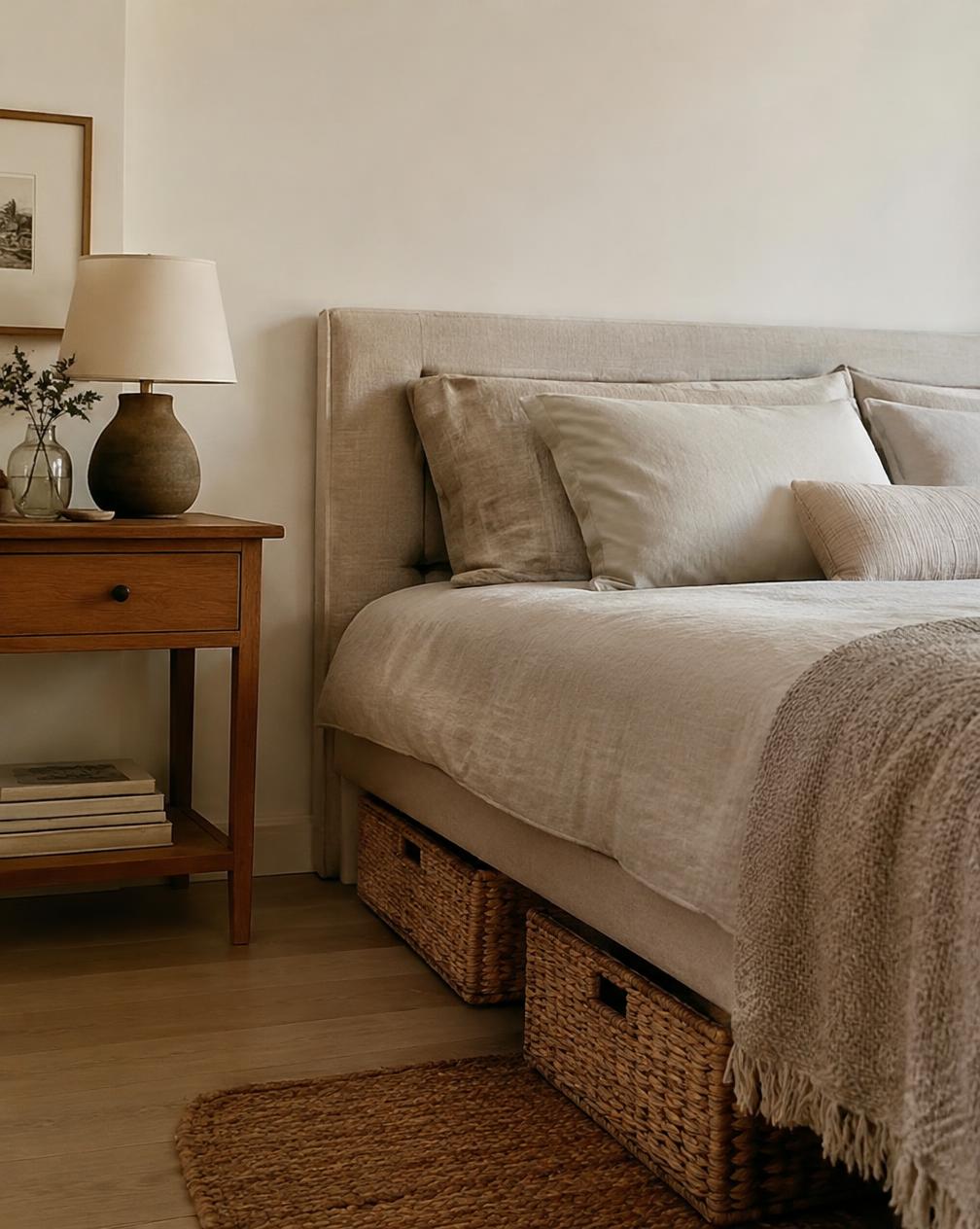
A realistic approach: keep the two or three pairs you wear every week on a low rack or tray near the closet entrance, and move occasional footwear — formal shoes, seasonal boots — into identified boxes or under-bed storage so they stop competing for prime floor space.
Rotate Seasonal Items Without Losing Track
If the closet cannot comfortably hold every season, move genuinely off-season clothing into labeled storage elsewhere. Clean and dry garments first, then follow their care guidance when choosing containers. Keep transitional layers accessible rather than packing away everything associated with colder or warmer weather. Record what goes into each container, especially if it moves under the bed or to a high shelf. For a limited budget, reuse sound baskets and boxes before purchasing a coordinated system. Spend selectively on the feature that fixes your biggest inconvenience, such as a stable shoe rack or shelf dividers, instead of replacing all your storage at once.
Maintain the Closet With Small, Repeatable Habits
Small closet organization ideas work best when they are easy to keep up, and the most effective closet storage solutions are usually the simplest ones: fewer categories, accessible hanging, and containers that fit the shelves you already have.
Once everything has a home, use laundry day as a quick check on the system. If clean clothes repeatedly land on a chair, make their storage easier to reach or reduce the size of that category. Keep a small outgoing bag nearby and review the closet when seasons or routines change. You do not need perfect folds or identical containers; you need enough space to find and return your belongings comfortably. Browse our closet organization collection for measured solutions, including hangers, dividers, baskets, and shoe storage that support the wardrobe you have chosen to keep.
You can start tonight without spending anything: choose one clothing category, remove the items that no longer belong in your current wardrobe, and return the pieces you wear most to the most accessible spot in the closet. Live with that arrangement for a week before buying any organizers — organizing a small closet on a budget means letting the arrangement prove itself first, then spending only on the one feature that would genuinely help.
Build a More Usable Closet
Editorial buying criteria, not tested product reviews. Retailer-specific recommendations await verified information and affiliate approval.
Disclosure: Rooms & Order provides independent home organization ideas and product guidance. We do not currently have active affiliate partnerships or affiliate links. In the future, we may earn commissions from qualifying purchases made through clearly identified affiliate links, at no additional cost to you. Learn more
- Hanging Organizers
- Options for arranging garments within the closet's existing dimensions.
- Garment-appropriate hangers
- Compatible rod accessories
- Accessible hanging zones
- Shelf Dividers and Baskets
- Contain folded clothing and smaller accessories.
- Shelf-compatible dividers
- Labeled containers
- Manageable stack sizes
- Compact Shoe Storage
- Keep regular footwear visible and occasional pairs organized.
- Low-profile racks
- Identifiable boxes
- Door-clearance considerations
Continue with our Closet Organization collection.
Pinterest editorial image
1000 × 1500 pixels · AI-generated interior illustration.
- Suggested title
- How to Organize a Small Closet | Rooms & Order
- Description
- Create a practical small closet with a focused declutter, useful hanging zones, divided shelves, accessible shoes, and affordable storage choices. Discover practical room-by-room ideas from Rooms & Order.
- Keywords
- how to organize a small closet, home organization, Rooms & Order, closets, bedroom
- Board
- Closet Organization
- Destination
- /ideas/organize-a-small-closet